By John Elton Pletcher
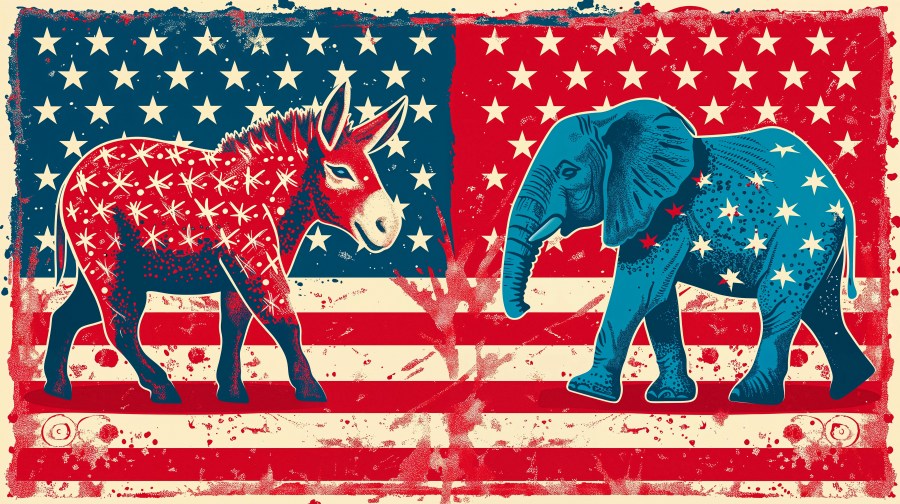
Sad irony abounds. Our United States stands at a critical juncture, mired in deep division and desperate political polarization. Heated elections are now the norm. We see loud town halls, gridlock on Capital Hill, and viral social media battles. Ideological chasms reach deeper and wider than ever, dividing families and whole communities. The fragmentation of American civic life appears both severe and personal. Today’s polarization is no longer born simply of policy differences, but increasingly stems from competing visions of truth, justice, and identity—both personal and tribal.
Our raucous season is not without precedent. America has faced frightening fault lines in our past. In fact, some of the most insightful guidance for our fractured age comes not from contemporary pundits but from two ancient sources: Abraham Lincoln’s Second Inaugural Address and the ethical teachings of Jesus of Nazareth.
Lincoln’s Moral Clarity Amid Civil War
Delivered on March 4, 1865, just weeks before the end of the Civil War and his assassination, Abraham Lincoln’s Second Inaugural Address is among the most profound speeches in American history. Rather than brag of the Union’s impending victory, Lincoln struck a tone of humility, sorrow, and reconciliation.
“With malice toward none, with charity for all, with firmness in the right as God gives us to see the right, let us strive on to finish the work we are in, to bind up the nation’s wounds…”
— Abraham Lincoln, Second Inaugural Address, 1865
Lincoln did not demonize the South. Instead, he acknowledged the nation’s shared complicity in the sin of slavery and framed the war as a divine reckoning. Both North and South shared guilt in the long-term evil of slavery. Amazingly, Lincoln resisted triumphalism and revenge. He called instead for compassion, moral introspection, and intentional work toward restortation.
This stands in stark contrast to today’s political climate, where victory often means vilifying the opposition and weaponizing past grievances. Too often, modern rhetoric doubles down on supposed ideological superiority and crowds out any shred of civic humility. Lincoln’s words model what mature political leadership can look like: compassionate, accountable, and future-oriented.
Jesus’ Divine Ethics: Radical Love and Reconciliation
Jesus of Nazareth, in his Sermon on the Mount (Matthew 5–7), taught a revolutionary moral framework. Remarkably divine, his ethic tipped conventional wisdom on its head. Perhaps, no teaching is more relevant—and more difficult—than this:
“Love your enemies and pray for those who persecute you, that you may be children of your Father in heaven.”
— Matthew 5:44–45, NIV
In a society divided by Rome’s imperial rule, ethnic tension, and sectarian violence, Jesus offered a truly radical, new way. Not violent resistance or passive acceptance, but active love. In our current political culture where opponents are frequently caricatured, even dehumanized, Jesus’ teaching seems almost impossible. But Jesus was not calling for naivete or a passive posture. Instead, he urged people to rise above vengeance and tribalism—to see others, even enemies, as bearers of divine image and worthy of great dignity. He called for mercy over judgment, reconciliation over retaliation, and humility over pride.
His teachings emphasize:
- Peacemaking: “Blessed are the peacemakers…” (Matthew 5:9)
- Self-examination: “First take the plank out of your own eye…” (Matthew 7:5)
- Forgiveness: “Forgive, and you will be forgiven…” (Luke 6:37)
These principles challenge both our modern conservatism and pervasive progressivism, reminding us that moral authority does not come from power, but from love. In reality, Jesus’ teachings don’t align neatly with any present political ideology, but they do supply a higher standard for both public discourse and private conversations.
Comparison to the Current Political Climate
Today’s American politics often resembles a zero-sum game, where power must be won at all costs. When one side wins, the other must lose. Nuance is non-existent. Algorithms reward outrage. Tribal loyalty is prioritized over truth, and public discourse is poisoned by malice.
In such an environment, Lincoln’s and Jesus’ messages feel radical—even subversive. They offer a different kind of leadership—a devotedly virtuous one that does not avoid hard truth but pursues deeper reconciliation. Both call for:
- Healing over scoring points
- Humility over hubris
- Service over self-interest
- Unity over tribalism
- Mercy over vengeance
- Truth with grace
Whereas modern politics seeks victory, both Lincoln and Jesus sought healing. Both proclaimed a fundamental truth: genuine transformation starts in the human heart. Their approaches reflect a moral imagination that transcends opposing ideologies and predictable power plays. Political structures serve genuine purposes, but no amount of legislation can substitute for mercy, justice, and love enacted by ordinary people.
Pathways Forward: What Can Be Done?
While America’s polarization cannot be healed overnight, the combined moral vision of Lincoln and Jesus suggests a path forward.
1. Cultivate Humility
Like Lincoln, we must acknowledge our own blind spots and moral failings. As Jesus said, “Why do you look at the speck of sawdust in your brother’s eye…?” (Matthew 7:3). Loud proclamation of moral certainty, minus introspection, leads to arrogant self-righteousness and rarely real justice.
2. Pursue Reconciliation
Justice and reconciliation are not mutually exclusive. Lincoln didn’t ignore evil, but neither did he nurture hatred. Jesus’ command to “turn the other cheek” (Matthew 5:39) calls for dignity, not docility. Jesus’ call to love does not mean ignoring wrongdoing, but it does mean seeking resortation rather than malicious retribution.
3. Speak and Act with Charity
“Charity for all” includes listening—truly listening with empathy, assuming good intentions more often, and treating others with respect—even online. Let’s make “malice toward none” the national norm again. In both speech and policy, Americans must recover the lost art of charity—seeing political opponents not as enemies but as fellow citizens. After all, Lincoln’s examplary charity mirrors Jesus’ selfless, others-oriented, compassionate love. And lest we forget, true charity sent Christ all the way to the cross, giving his life graciously for the good of all.
4. Remember Our Shared Humanity
Even amidst disagreement, Lincoln reminded us of our shared national story. Jesus’ way reminds us of our shared divine image (Genesis 1:27) and our lasting call to love our neighbors (Matthew 22:34-40). Lincoln’s words and Jesus’ wise way supply tried and true concepts, ancient truths capable of tempering political hostility and catalyzing our unity once again. Most Americans, despite our differences, genuinely desire safety, opportunity, and dignity. If we focus on shared hopes instead of our division lines, we might rediscover our common, divinely-given purpose.
The question remains: Will we we dare to digest such hopeful truth and pursue hopeful healing?
Conclusion: A Hopeful Challenge
In this era of rife division, Americans are faced with a choice: continue down the road of resentment and polarization, or recover the moral vision that shaped some of the nation’s most enduring ideals.
Lincoln and Jesus do not offer easy answers. They offer something harder—and even better: the path of humility, charity, and sacrificial love.
It is not weakness to forgive. It is not naïve to seek peace. It is, as Lincoln said, the work of “binding up the nation’s wounds.” In that work, every citizen has a part to play in our healing together.
References
- Lincoln, A. (1865). Second Inaugural Address. The Avalon Project, Yale Law School. https://avalon.law.yale.edu/19th_century/lincoln2.asp
- The Holy Bible, New International Version. (2011). Zondervan.
About the Author
John Elton Pletcher writes and speaks about the dynamic intersection of faith, work, and culture. He is the author of Your Omni Year, Henry’s Glory, Henry’s Christmas, EmotiConversations, Joy & Thriving, and The Jesus You’re Searching For.
 johneltonpletcher
Well said, John. Thank you.
John,
Excellent article!
I really appreciated the correlation & comparison of Lincoln & Jesus.
Very creative, insightful & timely advice for our country today!
Dan
Dan Sigmon
Care Pastor
Manor Church
[https://cdn2.hubspot.net/hubfs/53/tools/email-signature-generator/icons/phone-icon-2x.png]
717-285-3138
[https://cdn2.hubspot.net/hubfs/53/tools/email-signature-generator/icons/email-icon-2x.png]
dans@manorchurch.orgdans@manorchurch.org
[https://cdn2.hubspot.net/hubfs/53/tools/email-signature-generator/icons/link-icon-2x.png]
manorchurch.orghttps://manorchurch.org/
[https://cdn2.hubspot.net/hubfs/53/tools/email-signature-generator/icons/address-icon-2x.png]
530 Central Manor Road, Lancaster PA, 17603
[https://www.dropbox.com/s/3482kygqhl5t8yb/Manoremail.jpg?raw=1]
https://www.facebook.com/manorchurch
https://www.instagram.com/manor_church/