Working with Dad

Dad & Dumptruck

I heard Dad say it often. “I love to work!” He seldom camped on a single profession. Some dubbed him “scattered, shot-gun-like, a jack of all trades.” Reality—he was skillfully gifted in a variety of arenas. His sundry mix of roles included commercial coach bus driver, car salesperson, pastor-teacher, camp director, entrepreneurial auto repairman, truck driver, and avid church ministry volunteer.

I often wondered: Did some of Dad’s work matter more or less than those jobs that were churchy, distinctly ministry-oriented? Randy Kilgore lends holistic insight: “God is at work in every corner of creation, not just the church. He is present in the stock market and the supermarket . . . in the assembly line and the picket line. When we become one with Christ, we join Him where He is already at work.”[1]

MadetoMatter

Ironically, many of my best father-son memories involve working with Dad. I usually grumbled under my breath and held such labor in low regard. Little did I know that these sweaty experiences would supply formative personal building blocks for my own outlook on work’s significance.

I mowed grass for the first time when I was seven. Dad walked immediately behind me, his hands giving the push right next to mine. My chin barely touched the lawnmower’s top bar; toes were mere centimeters from the blade. (I’m fairly certain there is a statute of limitation on child endangerment.) I was thrilled at such a big opportunity, failing to fathom the agonizing years of mowing yet to come.

While living in rural MI, our family worked a small hobby farm of animals and crops. I rose at 6 a.m. each morning—bright sun or blowing snow—to perform a vast list of smelly, grimy chores. Gather eggs, slop hogs, milk goats, and clean stalls. The same monotonous routine took place around 5:30 p.m. each evening. “’Builds character, Son. ‘Builds character.”

Dad owned a ’61 GMC pickup. The summer I was twelve, we worked tediously at replacing the motor and refinishing the body. I assisted by handing Dad grimy tools, crawling in and out from under the truck, holding greasy parts in place, sanding fenders, guzzling iced tea, and pretending to help Dad solve what seemed like endless setbacks. I was big stuff.

Saturday mornings during high school, I would drag my lazy bones out of bed to join Dad for breakfast and the big job of visitation. Our church had a bus ministry that transported children to church on Sunday mornings. In order to prime the pump, reach out to families (and hopefully boost Sunday attendance), we would visit each child’s family. Every Saturday was a new people adventure, an all-out foray into a foreign land. Houses were jungles filled with rambunctious breakfasts, blaring cartoons, and stinky furniture—plenty of drama and trauma, the likes of which I had never beheld.

Dad also taught me how to run a chainsaw, chop logs, build a fire, bale hay, change a tire, and quickly prepare to deliver an encouraging faith talk for a ministry team.

Thirty years later, I realize I also learned big building blocks that proved formative to my own work perspective. These include:

  • Every job has tedious, mundane tasks. Don’t gripe. Just do them; then you can ride bike, play Atari, build the tree fort, or read a book.
  • Worst first. This is now one of my own favorite axioms, and my children groan. Set out early to conquer the least fun jobs. Then you can do the tasks you actually enjoy.
  • Hard work can be fun. Your attitude makes all the difference.
  • God is crazy about people. He especially loves the ones with smelly couches who yell at their kids while burning waffles on Saturday mornings.
  • Creativity is good and God-like (Genesis 1-2). Dad repainted the GMC truck multiple times. It started out banana yellow, shifted to classic black with an orange tiger stripe, and finished as candy apple red with a metallic fleck (my personal favorite, because I was a part of that final paint job). Creativity is a joy-filled tool to be employed in virtually any job, a genuine gateway to ingenuity.

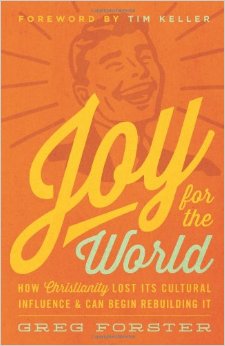
Greg Forster declares a vibrant connection between our Heavenly Father’s work and our work: “We can be fruitful because we are made in the image of a Father who creates . . . we do work within the universe he produced to produce blessings within it.”[2]
Joyfortheworldwrench

Call it rose-colored glasses, but I now realize that working with Dad was truly good. And I find great encouragement in realizing I am in good company. Christ held a very near-and-dear perspective regarding his Father and his Father’s work. When accused of desecrating the Sabbath, he taunted the Pharisees with his own Father’s monster work ethic. “My father is always working . . .” (John 5:16-17) And Christ went on to explain that for insight, direction, and agenda, he takes his cues from his Father. “. . . the Son can do nothing by himself; he can do only what he sees the Father doing . . . the Father loves the Son and shows him all he does. Yes, and he will show him even greater works than these, so that you will be amazed.” (John 5:19-20)

When I reflect on the works accomplished by both of my Fathers, I am indeed amazed and inspired anew to follow their lead.

[1]Randy Kilgore. Made to Matter: Devotions for Working Christians. Grand Rapids: Discovery House, 2008, p. 130.

[2]Greg Forster. Joy for the World: How Christianity Lost Its Cultural Influence & Can Begin Rebuilding It. Wheaton: Crossway, 2014, p. 221.

Finding God’s Work in William Faris

faithworkpuzzle

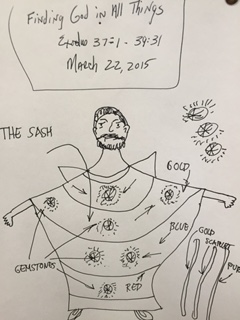
I was stunned, quickly swept up in such brilliant insight. We were in staff prayer time; I was standing by the bulletin board. A section of this board holds William’s drawings of various Bible stories. Lifting my eyes while listening to others pray, this particular composition’s title grabbed my attention. Carefully scribed on the page is a combination of both thought-provoking words and detailed sketch. His picture’s simple, crisp lines drew me to further consider the implications—both deeply theological and practically down-to-earth.

Our church has been on a faith @ work adventure over the past two years, deliberately seeking to engage with God’s view of our daily work. We are aiming to see more clearly how we join his mission in our daily tasks. We’ve been learning to break up the sacred-secular divide, to view and do our ordinary tasks as kingdom initiatives, and to appreciate our everyday workplaces as our primary mission fields. By his grace, we are beginning to see God in all things, even in the dusty and seemingly mundane.

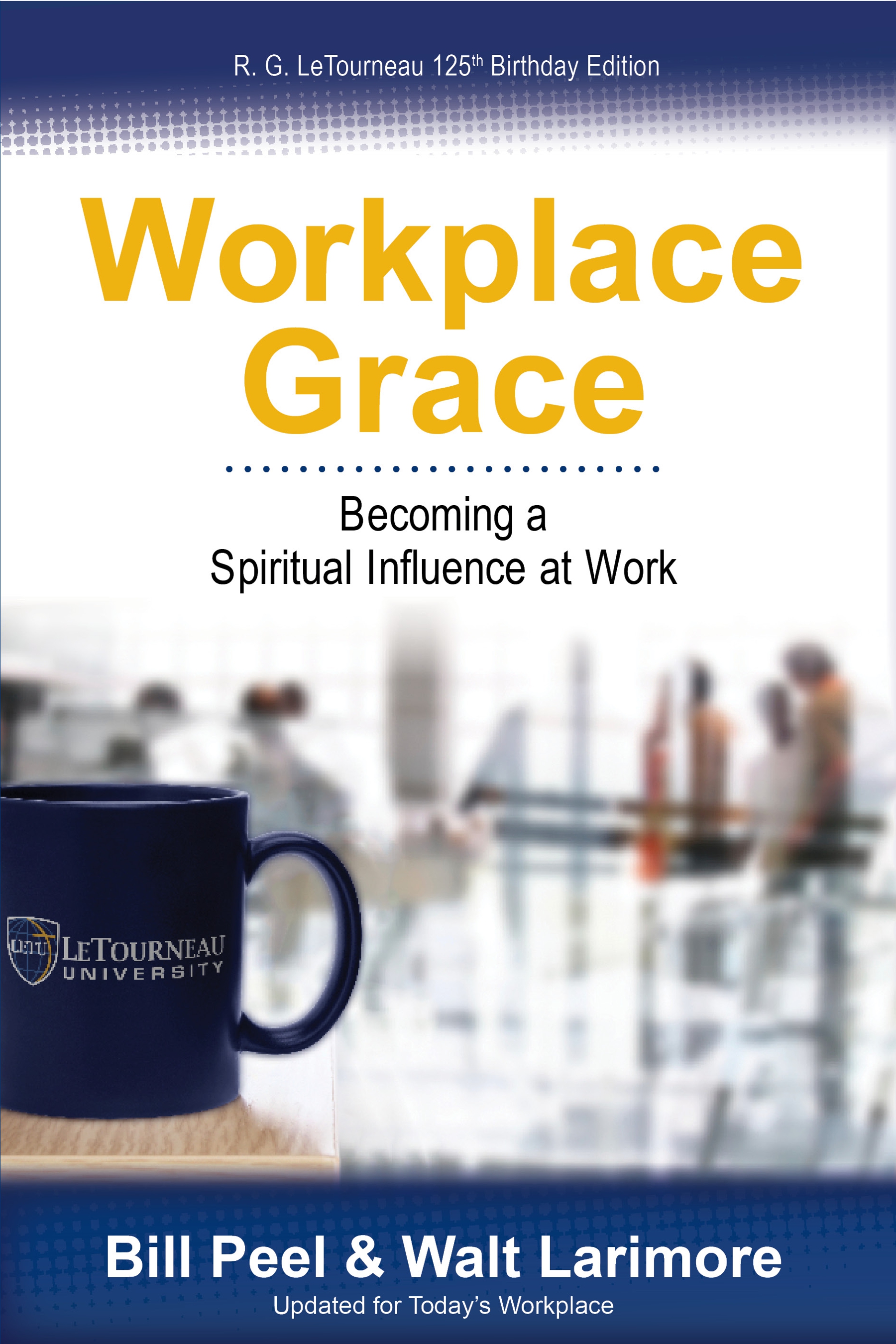
Just last Sunday, we enjoyed hearing Dr. William Peel, the Executive Director of the Center for Faith & Work at LeTourneau University and co-author of Workplace Grace: Becoming a Spiritual Influence at Work.[1] During an extended interview, Peel shared one of his favorite practices for faith integration. “Ask the WIGD question each morning and throughout your day. What Is God Doing? What is God doing in and through my business today? What is God doing in this client or coworker’s life? What is God doing through these opportunities, and how might I join him?”

WorkplaceGraceCover

It should not have surprised me that William Faris’ artwork expresses kindred theoretical sentiments. He listens carefully in church services and his weekly Life Group study. His hands then skillfully join his mind, both working together to express what he sees. This particular drawing is simple yet poignantly intriguing. A bearded stick figure is draped in a strange-shaped gown, with unique décor embellishing the garb. William supplies a top-of-page biblical passage as the source of his inspiration: Exodus 37:1—39:31.

William Faris sketch

My suddenly curious yet cursory review of this Scripture validated my dusty recollection. Here is a description of the work performed by the ancient artisans of Hebrew sacred relics. Bezalel, Oholiab, and a team of craftsmen created the Ark of the Covenant, tabernacle furniture, and the priestly garments. Chapter 36 sets the stage: “the LORD has given skill and ability to know how to carry out all the work of constructing the sanctuary . . . to do the work just as the LORD has commanded.” I am deeply moved by this realization: such scriptural setting supplied inspiration for William’s own artwork, now thousands of years later.

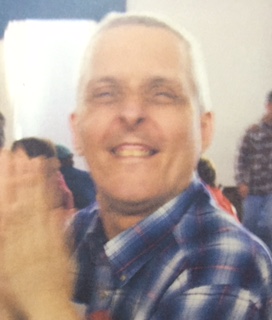
I must confess the reason I am so stunned. William Faris faces a great personal challenge; he lives with a profound cognitive disability. Now in his fifties, William lives in Faith Friendship Villa, a couple miles from Manor Church. He faithfully attends worship services each weekend along with other residents. Willam and friends are vibrantly involved in their Life Group, led by people who are lovingly committed to working with individuals and families affected by disabilities. With such passionate work, this group regularly chooses to see God in all things.

William Faris

So, I am personally stirred by William’s artistic expression. Not only does he reflect theological savvy in his sketch; his own work remarkably reflects the image of his creative God and the extraordinary capabilities God has granted.

Drawn in by his work—both the sketch and the link to the biblical account—I am stirred afresh by the fact that it is God who gives skills and abilities to workers. William captures with loving stroke of pen on paper the old, old story. And he embodies with vibrant Spirit the very essence of such gifting. As William Peel reminded our crowd, we can see God at work daily in all things. WIGD? We see God at work through William Faris and his art.

And I am further captivated, swept up in this oh-so personal, yes, even convicting question: Am I personally integrating each day with such skillful sophistication—daring to see God at work in the “all things” of my own life—both in the old, old story, and in the current story of our lives?

[1]Bill Peel and Walt Larimore. Workplace Grace: Becoming a Spiritual Influence at Work. (Longview, TX: LeTourneau Press) 2014.

What Christ’s Finished Work Means for Our Life and Work

??????????????????????????????????????????????????????????????????????????????????????????????????????????????????????????????????????????

After five tedious hours of sanding and three coats of poly-finish, the vintage-1920’s, solid oak chair is restored. I lay my brush atop the can of urethane and step back to inspect. With a satisfied grin and a nod to the chair, I affirm: “This project is now finished.” It’s the culmination of both artful plans and hand-numbing toil. I smile. It’s now beautifully refinished!

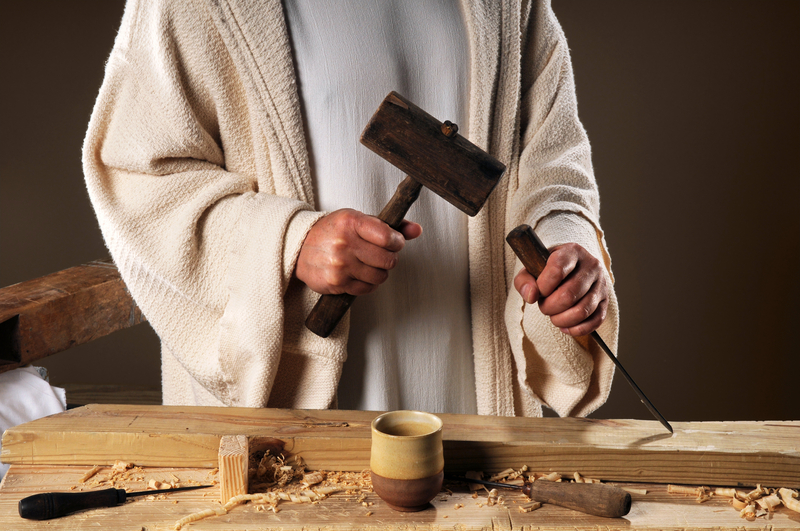
On that bleak day at Golgotha, Christ cried out, “It is finished!” (John’s Gospel, 19:30) What did he mean? We might assume Christ was so profoundly exasperated that he was exclaiming, “It’s been agonizing, and now, it’s OVER!” Perhaps. But perhaps he meant even more. Throughout Christ’s time on earth, he worked. He worked hard. In Mark 6:3, people recognized him as the carpenter. A tekton engaged in hands-on work with wood and/or other sculpting and building materials. Prior to assuming his role as Rabbi-Miracle-Worker, Jesus plied the trade of his father, Joseph. With Christ’s baptism and inauguration of his kingdom initiatives, his Heavenly Father’s mission-business shifted into a next phase of implementation. Jesus taught crowds; he trained disciples; he touched the suffering; he transformed lives by his grace. In a real sense, his hands were still sculpting. Like most jobs, he had to work around the haters and cynics. On one such feisty occasion, he replied, “My Father is always at his work to this very day, and I too am working.” (John’s Gospel, 5:17)

????????????????????????????????????????????????????????????????????????????????

The language of Jesus’ cry from the cross was ripe with significance. Tetelestai. “It is now fully accomplished, totally completed. The plans have come to fruition. It’s paid in full. Redemption has fully arrived!”

How might Christ’s decisive cry, “It is finished!” impact our daily work?

We can affirm the value of long-term planning and implementation. Much of the Father’s work—and then his Son’s work—involved establishing and working out the ancient prophecies. Christ’s life work demonstrated marvelous fulfillment of those plans, culminating in extra-dynamic ways with the cross, resurrection, and ascension. Consider this: when we make strategic plans and work hard to implement them, we are more fully living out the image of God, matching his very character and transformative intentions for us.

We can infuse our daily work with his redemptive aims. Christ’s loud personal cry, tetelestai, declared the complete arrival of redemption. This should motivate us to make sure our own work keeps redemptive purposes in view. How does what I do today serve with humble sincerity, bless the mess, help reverse the curse, clear the confusion, and bring truly Good News to people who experience the bad news everyday? With both our daily actions and our daily words, we can share Christ’s hope-filled redemption.

We can work hard, relying on God’s grace. The Apostle Paul, after rehearsing the creed—Christ’s death, burial, and resurrection—insisted that he had worked harder than all the other apostles, “—yet not I, but the grace of God that was with me.” (1 Corinthians 15:10) In like fashion, it is the grace of God that confidently propels our own work today. We can fully trust him and praise him for such grace!

We can intentionally plan to finish strong. What does it take to finish strong in your life work? In their discussion of a strategy for entrepreneurs planning to finish well, Richard Goosen and R. Paul Stevens lend five insights: (1) Keep articulating your life goals, not just when you are young, but throughout life; (2) Constantly refresh your sense of calling; (3) Engage in an accountability group; (4) Practice thanksgiving day and night; and (5) plan on lifelong learning, blending study, work, and play all along the way.[1]

‘Ever wonder what Christ felt on certain days in the carpentry shop, especially when working on tough projects? How often did the skin on his hands get dry-cracked and calloused? What expression crossed his face when a splinter snagged him? And I wonder what words crossed his lips when he wrapped up an especially challenging piece? I have a hunch I know, and you probably do as well. After all, there was the day his hands held rough-hewn beams, and they felt the ugly work of nails. And on that day, Christ cried out, “It is finished!”

Take heart. His finished work and triumphant word supply all the grace we need to press on, work hard, and finish strong.

?????????????????????????????????????????????????????????????????????????????????????????

[1]Richard J. Goossen and R. Paul Stevens. Entrepreneurial Leadership: Finding Your Calling, Making a Difference. (Downers Grove: IVP Books, 2013) 176-179.

See Your Work through Better Lenses

?????????????????????????????????????????????????????????????????????????????

What do you see? Is your vision blurry?

Michelle gets up each morning to teach math at Donegal High School. Plenty of days, it could seem like exponential drudgery. Amid tedious numbers and grading ad nauseam, what might infuse her daily work with real joy and significance?

Andy works on broken-down automobiles every day, rain or shine. His tasks are greasy, grimy, and often knuckle-numbing. He’s a FORD guy at heart, but willingly turns wrenches on anything with wheels. In the past two years, he has curiously discovered fresh purpose and greater sense of personal mission.

Charlie designs and installs high-end video/audio in primarily commercial applications. In recent months, he’s been overheard saying: “We used to have a good business; now we have a seriously GREAT business.” Why such advancement?

Abigail is in her 20’s, a brilliant art student, passionately discovering how her crazy creativity and design flair might actually evoke God’s smile and express Christ’s own passion for recreating and redeeming.

Each of these hard-working leaders has very intentionally engaged in a next-level adventure during the past twelve to twenty-four months. They have embarked on the audacious quest to more fully integrate their faith and calling in Christ with their daily tasks.

They are each seeing and developing life vision with bolder clarity, utilizing some better lenses for discovery.

First, they are developing a bolder perspective that includes a serious theology of work. They’ve started to see God as the first creative Worker and each of us, made in his image, as coworkers, co-rulers and co-leaders over his creation. They are seeing a bigger vision of God’s redemptive plans to reclaim humans and all of creation—including our everyday work—as marvelously instrumental in His redemption story.

Each of these workers is also seeing more clearly with a second lens, a greater commitment to personal integration. Instead of viewing their daily life as split-up, compartmentalized between secular life and sacred life, they are learning to see life as WHOLE, gaining a more holistic integration of faith and work. With the opportunity to love God and neighbor with all they have, every action, decision, and conversation in ones’ workday can be and should be all to the glory of God. They’re finding they can truly BE the church Monday through Saturday, not just on Sundays. It’s WHY Christine was so instrumental in helping one of her clients, Robert, come to a renewed faith in Christ this Christmas season. It was such a joy to see him baptized in early February. Christine was taking her faith to work everyday and impacting Robert, and then bringing him along with other friends to church on Sundays. Robert was responsive to Christ, and Christine stood with him helping him as he publicly declared his faith in Christ at his baptism.

And that’s the third lens. It’s not only a theological lens and an integrated lens, but it’s an intentionally relational, missional lens. For people like Christine, as well as my friends, Kevin, Greg, Chuck, Barb—and others who are passionate about connecting—there is this growing perspective that their workplace is their primary mission field. With such clarity of vision, leaders say, “Yes, I am there each day to glorify God with extraordinarily excellent work, including superb products and services. AND I am there to build life-changing connections that can potentially change people’s eternal destinies.”

Michelle, my friend who teaches math, says this about her own vision now:

“I never realized that my workplace could be my mission field. I always felt that my work had meaning. I just did not realize the potential for mission that was surrounding me every day. Throughout this experience, I felt an amazing shift in my spirit. I started to see that I could be a positive role model for other professionals. I realized that my mood, attitude, and actions could influence others. I now look for ways that I can make a positive contribution to the world through my work—from the simple act of redirecting a negative conversation to discussing the Bible with a colleague. I feel more comfortable sharing my faith and being a positive example for others in my workplace.”

How about your vision at work? What do you see?

Vision—eye


Work’s Agony and Ecstasy—Remembering Robin Williams

??????????????????????????????????????????????????????????????????????????????????????????

“Nano nano.” As a fourth grader, I tried to spread my fingers just like Mork from Ork in order to bid adieu to friends at school. (my right hand, no problem; left hand, I still can’t do it.)

We are awash in a sea of emotions at the stunning news of Williams’ suicide. Like so many funny men, the work of his early years was hysterical and at points raucously crude—symptomatic no doubt of youthful immaturity. As his body of work grew, so did his sophistication, choosiness of roles, and thoughtfulness of his characters. Still always treating us to jovial faces and good-like-medicine laughter, his work became more and more purposeful. Complexity of characters and message are profound in Patch Adams and Dead Poets Society. “O Captain, my Captain!” “Carpe diem! Seize the day, boys.”

So we longingly ask, what goes wrong? How does such a hilarious guy of stardom fall so far emotionally that he chooses to exit? The forensics and toxicology are still being completed. It is well documented that he battled both depression and addiction. Friends have been interviewed, and they confirm that he was struggling, albeit with a seemingly strong support system enfolding him.

None of us, especially those of us with deeply religio-spiritual backgrounds, should rush to hand out diagnoses and snap judgments. Let’s not forget, it was not long ago that Rick Warren’s family faced the tragic loss of their son. Let’s not forget, so many of our extended families have experienced first-hand the ravages of mental illness and suicide—including my own cousin just a few years back.

What can we say? Because God designed us for integrated living, we must resist the urge to compartmentalize, thinking that our mental-emotional health is incidental, a sidebar. If you are struggling with depression and addiction, reach out for hope and help, both to Christ through spiritual mentors and to health professionals—please do it NOW!

What else can we say? Because God wants us to work as his coworkers, in his image (Genesis 1:26-28), we need to balance life better. Work hard, yes, but resist defining our own identities solely on our work success. Here’s where our faith, a deeper trust, has to intersect with our creative good works, pre-ordained by our Maker (Saint Paul, Ephesians 2:8-10). Will we trust him? Don’t let your own identity become so wrapped up with your work outcomes that you descend into the abyss, especially in those seasons when your work is not producing a remarkably fruitful crop. You are so much more than the sum total of your portfolio!

I recently read Irving Stone’s classic biographical novel of Michelangelo.[1] We readily applaud the sculptor-painter’s amazing achievements, but we often fail to recognize the deep agony, work frustration, and overall despondency he faced with each artistic endeavor.

What hope can we find in our own dark moments, when work is less than stellar, when life seems to rot, and we hear those voices from the shadows? Let’s be real real. Most of us are moved by Robin’s tragic story because the psychological tremors hit too close to home, echoing into the depth of our own souls, homes, and workplaces. We all have our own moments and voices that whisper diabolical thoughts in the face of our agony.

Courageously recall, there is indeed an unseen battle. Some will accuse me of over-simplifying, but we dare not miss the essential power of prayer in putting on God’s protective armor (Saint Paul, Ephesians 6:10-20). The biblical leader of workers, master wall builder, Nehemiah, handled his own opposition from critics, the taunting voices, would-be distractions, and impending despair. He replied, “I am doing a great work, so I cannot come down . . .” And then he passionately prayed, “Strengthen my hands.” (Nehemiah 6)

C. Neal Johnson, calling for vigilance in spiritual warfare related to our work-a-day business, asserts:

“There is also a form of prayer called inner healing prayer (IHP). It is an approach to prayer in which an individual can identify and resolve deep-seated emotional issues that have plagued his or her attempts at healthy living . . . Both research data and anecdotal testimonies evidence significant long-term, deep, inner healing as a result . . . Training in how to conduct IHP is highly recommended in order to be effective and to avoid unscriptural activities.”[2]

Let us pray fervently for the Williams’ family and close friends, for peace and strength, hope and comfort. Let us pray for one another, for deep healing in our daily work’s agony and ecstasy.

And by all means, Carpe diem. With Christ’s strength and for his glory, let us make our lives extraordinary!

????????????????????????????????????????????????????????????????????????????????????????

[1]Irving Stone, The Agony and the Ecstasy: A Biographical Novel of Michelangelo. (Doubleday and Company, 1961).

[2]C. Neal Johnson, Business As Mission: A Comprehensive Guide to Theory and Practice. (IVP, 2009), 450-51.

Hard-Working Moms—There’s Hope!

???????????????????????????????????????????????????????????????????????????????

Fall of second grade, I proudly submitted a carefully crafted biography of my mom, composed on classic, dotted-line paper. This was a special writing project, to be displayed in our hallway for parent-teacher night. I waxed eloquent, reporting with the utmost, seven-year-old precision: “My mother does not work. She is a housewife.” Little did I know how clueless my statement was or how ridiculously male chauvinistic. Mom had to have felt like it was hopeless—all that time, her amazing nurture, and energetic hard work—what a waste. I must have seemed like a hopeless case.

Mom-hood reveals ever-deepening layers of hopelessness. After all, moms’ work is never done. School projects. Taxiing kids. Financial pressure. It all builds up and pushes down on a mother’s soul. Mom is expected to be the Chief Operating Officer of the family corporation. Along with endless tasks, moms are deeply concerned about their kids’ feelings and also each unique developmental stage. God wired moms with emotional and developmental radar, in great contrast to dads. Most guys are only slightly aware that there might be some small humans, under four feet tall, living in the house. Mix in all of a mom’s concern over her kids’ choices, friends, and future plans. Any cocktail of these ingredients yields high anxiety. Mom’s work can feel hopeless.

So what’s a mom to do? Where can moms find fresh doses of new hope in the midst of all they juggle at work? I’ll propose that several hope-filled insights emerge from a couple of women, undeniably two of the greatest moms in all of history.

BEST MOMS, EVER!

Luke’s Gospel records how Mary encountered the angel. She said “YES” to God’s plans, even though they were immensely challenging (Luke 2:38). It’s not everyday a young woman is told she will become pregnant by the Holy Spirit. There would be gossip and accusations. “Who can believe such a claim? It’s scandalous.” She was to become MOM to the Son of God! And she said, “I am your servant; May it be. . . .”

It seems that a YES to God is the essence of deep trust—genuine dependence—and the very core of faith for all of us. Will moms step boldly into what God wants? Will you listen and be receptive to God’s words, his instructions? Will you process life’s difficult assignments, hard tests, and rascally scenarios through God’s truth and his powerful presence?

Years ago, there was a mom named Susanna. She had a gaggle of ten kids with her husband, Sam. Sadly, their house caught fire and all but burned to the ground—not once, but twice. Her husband was devoted, both to God and to Susanna. However, Sam also had a very judgmental side, often expressing strong critique toward her and the children. He was also precarious with money, which made life extremely difficult for the family. Susanna constantly sought to cultivate Jesus’ values and heart, in all daily actions with her children. One of their girls, Hetty, a very bright but equally strong-willed young woman, kicked up her heals. She recklessly leaped into a brief fling with a young lawyer and got pregnant outside marriage. This caused great disgrace to the very proper and religious family. Dad disowned her, but Susanna persevered with motherly love for her wayward daughter, Hetty.

A Mom’s Integrated Prayer

This is actually a very old account, so you might benefit by hearing one of Susanna’s prayers. Each phrase reveals just how integrated she was about her daily work and how much she desired to incorporate Jesus’ heart into her own heart as well as her children.

“Help me, Lord, to remember that religion is not to be confined to the church, or closet, nor exercised only in prayer and meditation, but that everywhere I am in Thy presence. So may my every word and action have a moral content . . . May all the happenings of my life prove useful and beneficial to me. May all things instruct me and afford me an opportunity of exercising some virtue and daily learning and growing toward Thy likeness. . . . Amen.” (quoted in Richard J. Foster’s, Streams of Living Water, 237)

Susanna’s son, Jacky, became one of the foremost leaders, thinkers, and provocative communicators of his era. John, as he was widely known outside the family, left a massive footprint on the culture of his day. And Susanna’s son, Charles, is responsible for crafting amazing songs, many of which are still sung in churches today. The family name is Wesley. Their profound legacy in Christian thought and practice resulted from Susanna’s passionate aim to form Christ’s heart in all of her children.

Both Mary and Susanna’s examples point out this vital truth: Mom’s best hope is found in connecting her own heart—and her kids’ hearts—with Christ’s heart!

There was a fantastic outcome for Mary’s work, even after comically losing Jesus in Jerusalem for three days. (How do you lose the Son of God?) Luke 2:51-52 notes the holistic development. Jesus grew in wisdom, in physical height, and in favor with both God and other humans. When moms access Jesus’ heart and choose to say YES, then kids grow strong and experience whole-person development—mentally, physically, spiritually, and socially.

Don’t miss it, moms. Your kids can grow up to make HUGE impact, to touch lives and become big workers in God’s kingdom business. You might say, “My kid will never be a Wesley. And he or she certainly won’t be Jesus.” OK, but you can raise kids who grow up to work hard daily, build the next bright future, fight disease, solve hunger crises, create noble cultural endeavors, plant churches, and in a myriad of other ways, share Christ with a world in desperate need of Jesus’ grace.

Moms, we thank you. Realize it or not, your work is full of hope!